 |
Subscribe / Renew |
 |
Contact Us |
| ► Subscribe to our Free Weekly Newsletter | |

Construction Bids
| home | Welcome, sign in or click here to subscribe. | login |


 print print  email to a friend email to a friend  reprints add to mydjc reprints add to mydjc |  |
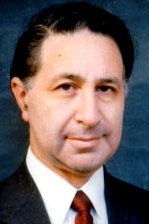
by Design By Clive Shearer |
December 8, 1999
As is my custom, at year's end, I like to examine what happened to my predictions for 1999.
The state revenue forecast at the end of 1998 called for belt tightening in 1999, predicting a slight increase in unemploy- ment, retail sales leveling off and a continuation of the Asian crisis. In my December 1998 forecast, I stated that to feel gloomy over these issues would be foolhardy, and that the Asian "crisis" would blow over due to the inherent power of Asia.
It was also my view that the root cause of Boeing's woes was a crisis in management, that Microsoft would remain strong despite the government's interference and that 1999 would continue with a strong economy. Looking back, I believe that these viewpoints proved to be valid.
This year, instead of an annual forecast, let us lengthen our vision. What will transpire by the year 2050, globally, nationally and regionally? I will examine these issues in a Socratic way, by asking questions, and inviting you to e-mail your responses to me for exploration in a subsequent column.
What do you think we will see in the next 50 years? Will the climate be much the same as it is now? Will we see a warming up, with attendant "desertification," global food shortages and hardship, not to speak of possible melting of polar ice and rising sea levels? Or will we see a cooling trend, as some predict, with longer and harder winters?
Either of these two latter scenarios will result in considerable change in our state. What do you think that change would be like? Or will climatic change not be a factor in the next 50 years?
Our current lifestyle on this planet is highly dependent on natural resources. While there may be huge oil deposits still to be found, fuel is a finite resource. What will happen when fuel becomes in short supply? Will the mood of the populace change? When electrical brownouts and shortages become the norm, food in refrigerators spoil, costs rocket, gasoline prices soar and inconveniences multiply, will we not see a clamoring for an alternative power source -- wind-driven, solar-powered and nuclear? What is your threshold? Electricity may power a passenger automobile, but could a battery propel a loaded 18-wheeler? What do you think will happen?
Water is ample on this planet, though fresh water is not. It can support a finite number of humans. It is not only the water we drink, it is water used by agriculture to feed livestock and grow crops that is vital. Population growth cannot continue at its current pace indefinitely. How will this affect the business and the people of our state?
There have been several mass extinctions of animal life during past millennia, the most recent being the disappearance of the dinosaurs millions of years ago. Is humankind's spread on this planet bringing about another mass extinction of animal and plant life?
October 1999 marked the birth of the six billionth inhabitant of this planet. Amazing since we reached one billion in 1804 and three billion in 1960.
And what of our state in 50 years? What will have happened to the wildlife and vegetation here? Will we find a happy balance between growth and protection?
People rejoiced at the end of the Cold War, yet had they studied their history books, they might have been a little more pensive regarding the long-term prospects for peace. The human being is a passionate creature. Much of our passion can be channeled into creative pursuits, but the dark side remains. Jealousy, religious fervor, the wish to right perceived wrongs are all still evident.
And when madness breeds madness can we honestly feel confident that none of this will affect the United States? Yes, I am talking about nuclear terrorism and chemical attacks. How would this threat change the daily life that you and I lead? What do you think?
Earthquakes, caused by movement of the earth's crust, are not serious. They have only become very dangerous because we have built structures upon that crust. And we know, with absolute certainty, that earthquakes will continue in our region.
An earthquake-resistant building may protect your life, but that building may not be usable after the event without considerable repair.
Even if we do have a large magnitude earthquake in the next 50 years in western Washington, the huge majority of us will survive physically unharmed. The real issue is the disruption that will occur after a large event -- damaged roads, bridges and buildings. Construction repair costs will soar, businesses will take time to recover and people will be delayed by detours on their way to work. But this is something that we will recover from and the community will strengthen as a result.
Humankind is tremendously resourceful. So much has been accomplished in the past 100 years. And when life becomes difficult, we have the wonderful ability to rally and work together in the most effective way.
I have no doubt that there will be dramatic changes in the next 50 years. I also am supremely confident that in the year 2050, people will still be working, raising families, enjoying their leisure time and hoping to retire comfortably. But it will be in a different world. There are too many elements poised for change right now for it to be otherwise.
Many of those changes will be wonderful -- medical breakthroughs such as new drugs, treatments and ways to lengthen life; new ways to increase crop yields; and communication breakthroughs that will make current equipment seem comical.
What do you think about the next 50 years -- globally, nationally and locally? Please e-mail your ideas to me at clives@earthlink.net. I would like to share your thoughts, anonymously if you wish, or with attribution, with all Daily Journal of Commerce readers.
Previous columns:


