 |
Subscribe / Renew |
 |
Contact Us |
| ► Subscribe to our Free Weekly Newsletter | |

Construction Bids
| home | Welcome, sign in or click here to subscribe. | login |


 print print  email to a friend email to a friend  reprints add to mydjc reprints add to mydjc |  |

November 10, 1999

By ANNU MANGAT
Journal Staff reporter
|
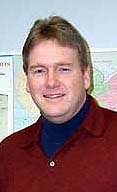
Q. Based on current election results, you appear to have lost your bid for City Council in Kirkland. Yet you seem to have a very cheerful outlook.
A: It's not everything. The bottom line is I spent nine years in public life, on the Planning Commission, Growth Management Commission, low-income housing, all sorts of things that I think are important we participate in. It's not my entire life; it's something you do to add to what you feel is important.
Q: How did you get involved in politics?
A: I think that architects have a duty somewhat because we can make the biggest impact on people in our own community. The structures we put up are what people complain about (laugh).
I grew up in Kirkland and back then, there wasn't a whole lot of park land, but there was open space. The open space now has buildings on it. My interest was to save the open space. If we're going to go forward, we need people like architects and planners who are involved professionally with this to step forward and take a look at the big issues. And the big issues now are starting to be land use, transportation and affordable housing.
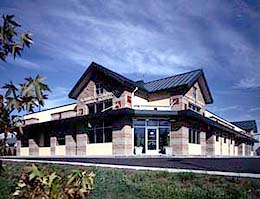
Q: About 40 percent of your firm's practice is devoted to veterinary facilities. How did you get involved in that?
|
It's at the point now where we are starting to see corporate entities. It used to be all mom-and-pops, but with the introduction of corporate veterinary practices our range of services has greatly increased. We do work throughout the United States for a corporate veterinary chain called Pet's Choice Inc. For us, it's been a great vehicle to expand our services.
Q: Are there any challenges associated with being a smaller practice. Are there markets that you're locked out of?
|
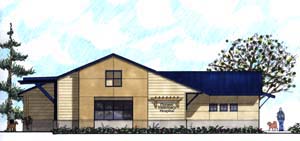
We spend more time on our client relationships, and those types of things can take time away from the practice. We work with a lot of veterinary facilities that can be mom-and-pop. Mom-and-pops don't know much from the standpoint of construction, what the process is. It takes a lot of hand holding to complete these projects, so we've got to be willing to dedicate nights and weekends to the veterinary side of our practice.
Q: Assuming you won't return to City Council, what role will you play in the public sphere?
A: I haven't decided. I'm not going to rule out a second run at this. We shape the environment by our participation at any level. And that doesn't stop just because you're not on council or you're no longer a politician. It starts because you're a citizen. Participate in the process. If there's something that really bothers you, don't sit back and read the newspaper and say it's a bad thing. Go down and tell `em how you would fix it. Citizens generally don't try to shape a project; they just try to stop it. They only come in at the end of a project. Shape the future. Don't wait for it to come up on you.
Q: Are there markets that your firm is shifting away from?
|
Q: Your firm has an unusual name. What is its significance?
A: Our firm had for many years been identified by the names of the partners Martenson Clark & Associates and was commonly referred to as MCA. Unfortunately, as partners retired or joined the firm, we always had to explain who we used to be as well as who we were. And in the age of "alphabet soup" firm identification, having the firm name shortened to MCA was not setting us apart from any other firm. The switch to Architectural Werks represents our belief that it is the people in the firm, the "werks," that make us different, not just the "work" we do.
Previous columns:


