 |
Subscribe / Renew |
 |
Contact Us |
| ► Subscribe to our Free Weekly Newsletter | |

Construction Bids
| home | Welcome, sign in or click here to subscribe. | login |


 print print  email to a friend email to a friend  reprints add to mydjc reprints add to mydjc |  |

December 8, 1999
By ANNU MANGAT
Journal Staff reporter
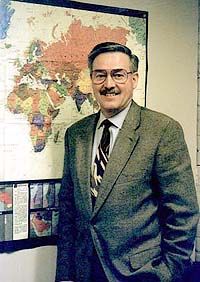
|
Berryman & Henigar Inc.
Office: 1215 4th Ave., Suite 1400, Seattle
Founded: 1975
Staff size: 35 locally; 250 nationally
Q: What does your firm do?
A: Berryman & Henigar is in three states Washington, California and Florida. The office here is involved primarily in three market areas civil engineering for municipalities, which includes water, wastewater, surface water, solid waste, transportation; community planning; and building safety, which includes building code compliance and field inspection.
In California, we have a strong civil engineering presence for such things as water and wastewater projects, along with a viable construction management practice. In fact, our San Diego office is designing the infrastructure for the new San Diego baseball park. In California, we are also known for our financial consulting work where we provide services to municipal agencies for things like helping newly incorporated cities, asset management and financial analysis.
Florida primarily does civil engineering, surveying and environmental work. They do a lot of work for the Florida Department of Transportation and for Ecology.
Q: What are your firm's most active local markets?
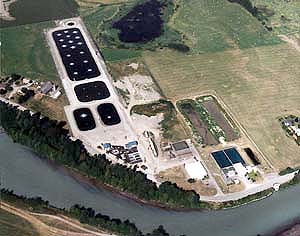
|
Q: Do you believe that this area could face a water crisis?
A: Sure. There will be professionals who tell you we don't have enough water and there will be those who tell you we do. The real issue is that the state Legislature has not stepped up to the plate and decided to solve the water-rights issue. They need to fund the Department of Ecology, and they need to help solve the water-rights issue. We probably have plenty of water in this state, but it's a matter of who has the right to it, and are we going to share water rights between large cities like Everett, Seattle and Tacoma? That evolution is going to be very important in the next 20 years. But the Legislature has got to step up and enact some new laws to enable us to solve those problems; if they don't, it will languish in the courts for years.
Q: What are some of the major challenges facing the engineering profession?
A: The challenge is how we're going to be doing our work and how we're going to deliver our product. In the past, consultants have always played a behind-the-scenes role but were really in control of projects. What we're seeing now is a movement to design-build, which is changing the role of the consultant to working for the contractor instead of working for the owner. It can be rewarding financially but can increase our liability because we can lose sight of our role as professionals to protect the public health and safety. It's much more of a business in design-build.
The other big challenge is that we're becoming a highly specialized culture. The business term is mainlining, you do what you do best. Just take civil engineering. It's harder to be a generalist than it was 20 years ago. That's why you're seeing megafirms such as URS Greiner Woodwood Clyde and Tetratech buying medium-sized firms because these medium-sized firms have developed expertise in specific areas. Large firms who want a wide spectrum of expertise know that the quickest way to expand is to buy rather than hire.
Q: How has the profession changed in the last 30 years?
A: You used to be able to predict the next 10 years. Today, you can't predict the next two years. You can predict that you're going to be in business, but because of computers and information technology and the speed it's moving at, it's real hard to predict how we we're going to be working in the next few years.
At a recent CECW conference, the grey beards said one issue was how to attract young people and how to keep them. And the message the seniors got from a panel of young engineers was we're not in engineering to make money because we make money on dot com stock. We're in engineering because we need something to do. It used to be a thrill to be an engineer. I'm afraid young people now see it as something to do for the next few years rather than a lifelong profession.
Q: What positive trends have you seen?

|
Q: What projects are you particularly proud of?
A: Personally, I'm most proud of the work I did in Alaska bringing wastewater treatment to communities that had only wastewater discharge. It took 10 years of commitment and a lot of plane trips; it was extremely challenging but very rewarding.
Q: What do you like best about your job?
A: Before coming to Berryman & Henigar, and as a vice president of a very large engineering company, it was all business and finance. Now I am really enjoying being the acting city engineer for the city of Sultan. I think principals should manage a project to get involved on a regular basis. This makes us keep in touch with the pulse of the profession and our firm. We get so caught in the business that we lose track of where the profession is going. What we're here for is to help communities plan, design and build their future.
Previous columns:


