|
Subscribe / Renew |
 |
Contact Us |
| ► Subscribe to our Free Weekly Newsletter | |

Construction Bids
| home | Welcome, sign in or click here to subscribe. | login |


 print print  email to a friend email to a friend  reprints add to mydjc reprints add to mydjc |  |
 Brian Miller Real Estate Editor |
October 24, 2024
Pits are a key barometer, a vital/morbid economic index we track closely at the DJC. Those voids below grade are a hallmark of development progress stalled … the lack of wherewithal to clamber back above the surface, with dirt beneath fingernails. Where optimism, initiative, capital, debt, daring, fanciful architecture and developers' dreams meet the merciless market, pits happen.
Buildings more often result. But still, we have pits. And they are now spreading across the region, like a pox upon the once fair visage of commercial real estate. It's a pestilence, it's a blight, but it's also the market's honest truth.
The last big wave of pits came after the Great Recession, circa 2008-2009. Some may recall the long-ago pit at Second and Pine, once to be a hotel, that Starwood filled with gravel and made a parking lot before, many years later, the Charter Hotel and Helios apartments rose from that void.
Let us now assess the pits of today. Let's rank them on a scale of one star to five. But let's not confuse them with rubble-strewn lots, their close cousins. (RSLs, generally fenced and comparatively tidy, represent investment deferred — not sunk costs.)
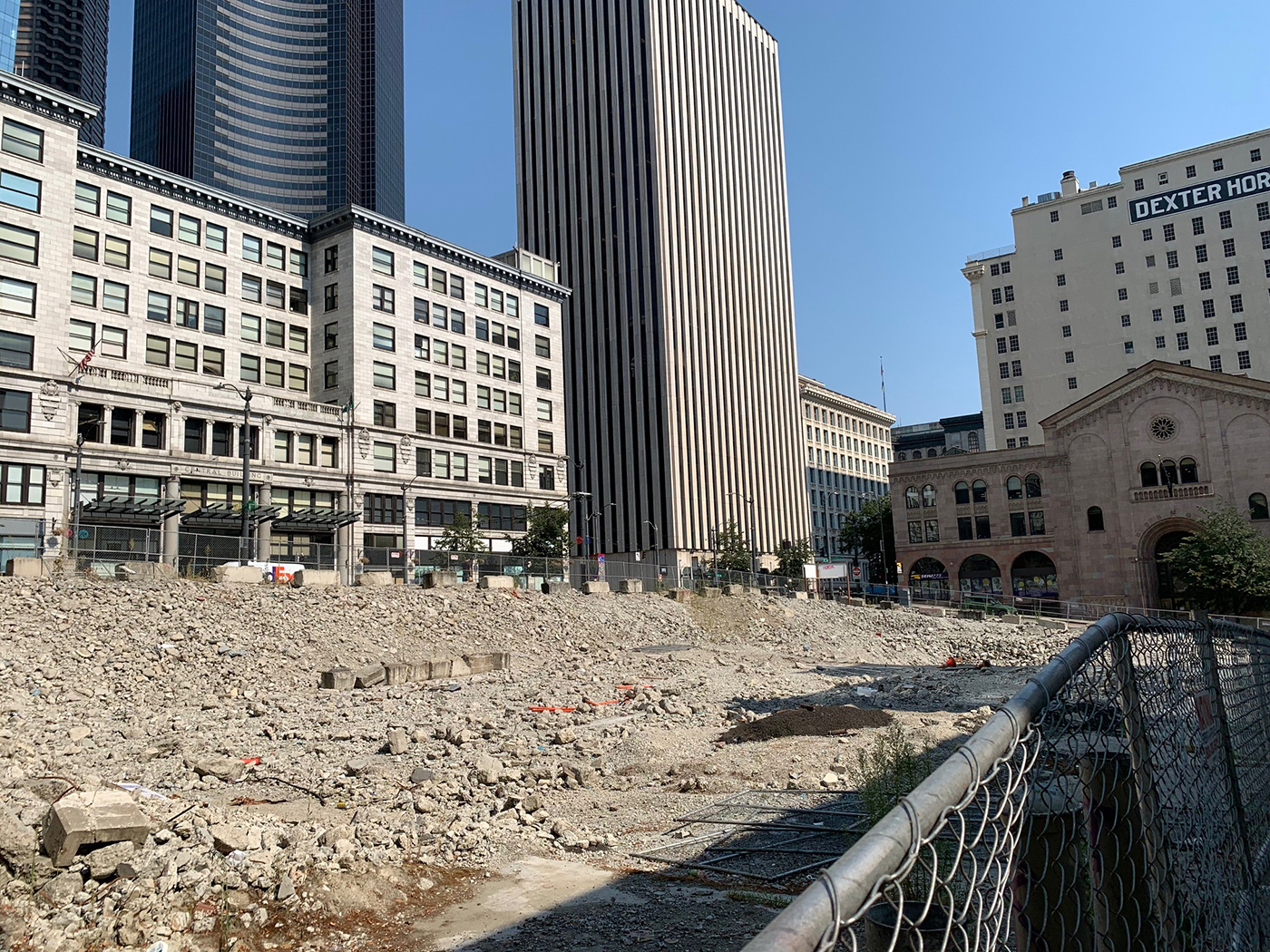
The pit: 801 Third Ave., the site of Urban Visions' planned office tower, aka The Net.
What it has: Location, location, location. This pit is situated along a major bus line in the heart of downtown. Unfortunately, that's precisely where office workers are unwilling to return.
What it lacks: Depth. On a sloping site, this pit needs more excavation. It generally gives an air of not trying hard enough. There's still a leasing sign from JLL, but it's selling the building, not the pit. On the positive sign, not much garbage or graffiti. This is a tidy pit.
Rating: One out of five stars.
Conclusion: This pit needs to pivot. Probably to apartments.
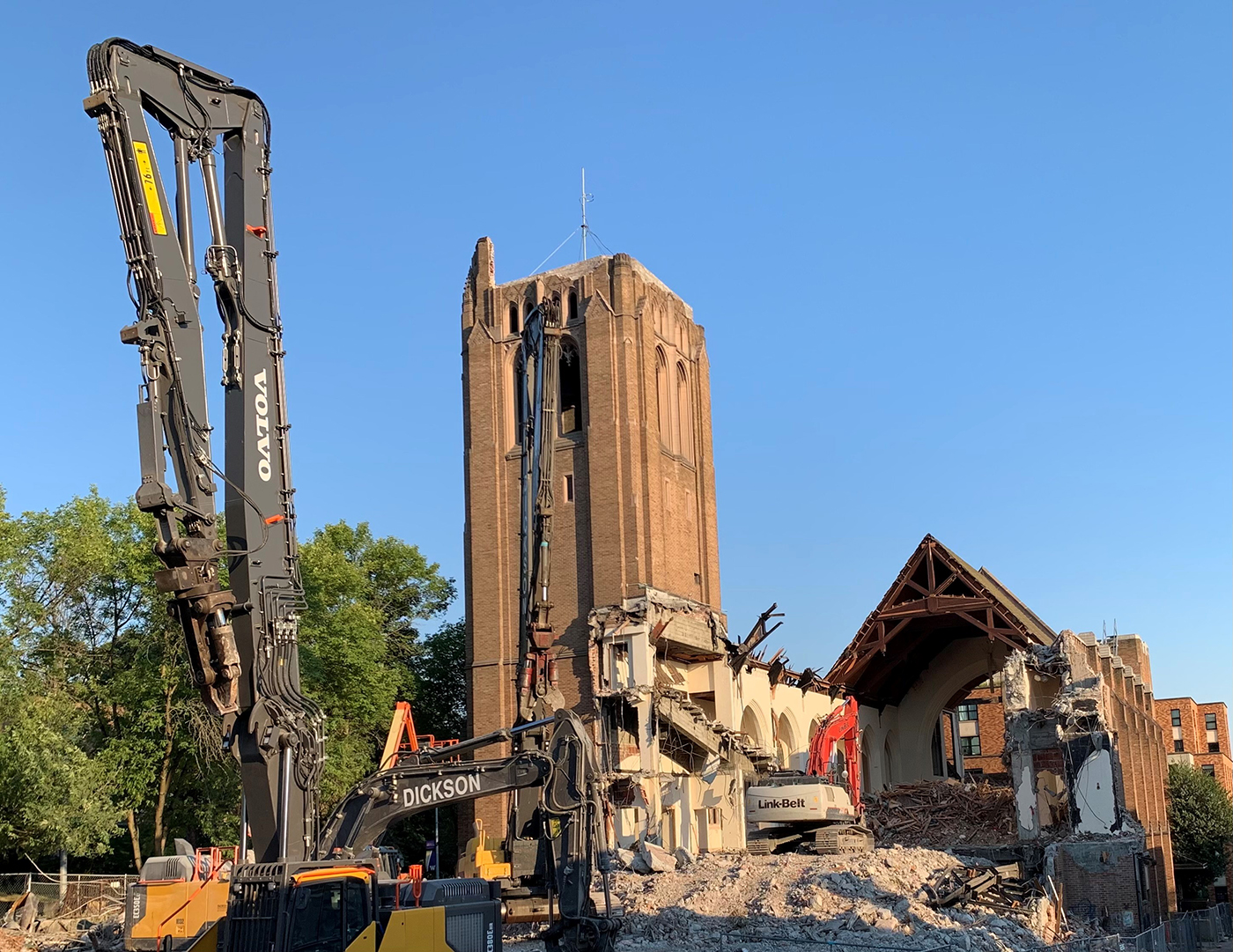
The pit: The former University Temple United Methodist Church.
What it has: Convenient to the UW campus and U District Station, both just steps away, this is a very student-friendly pit. Developer American Campus Communities and architect GGLO have a permitted two-tower plan for 224 units (with many more beds).
What it lacks: Urgency. The master use permit came in 2021, soon followed by the church demo (pictured). ACC sold to investment giant Blackstone the following year. So this project got lost in the seat cushions? This pit is clean, presentable and eager to learn.
Rating: Two out of five stars.
Conclusion: With rival private student-housing projects on pause in the U District, pave it for parking and wait for demand to rebound. Or sell to the U.
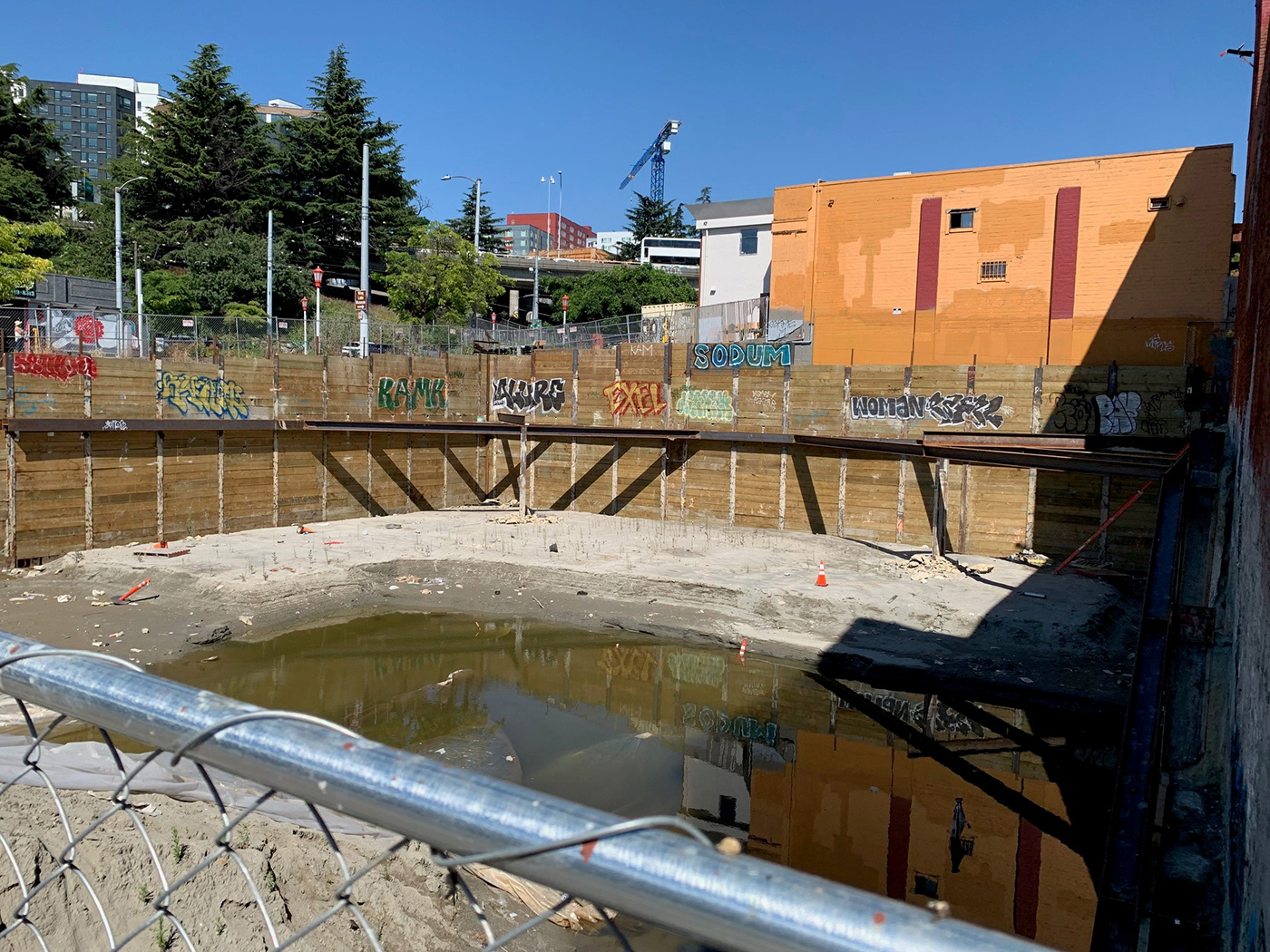
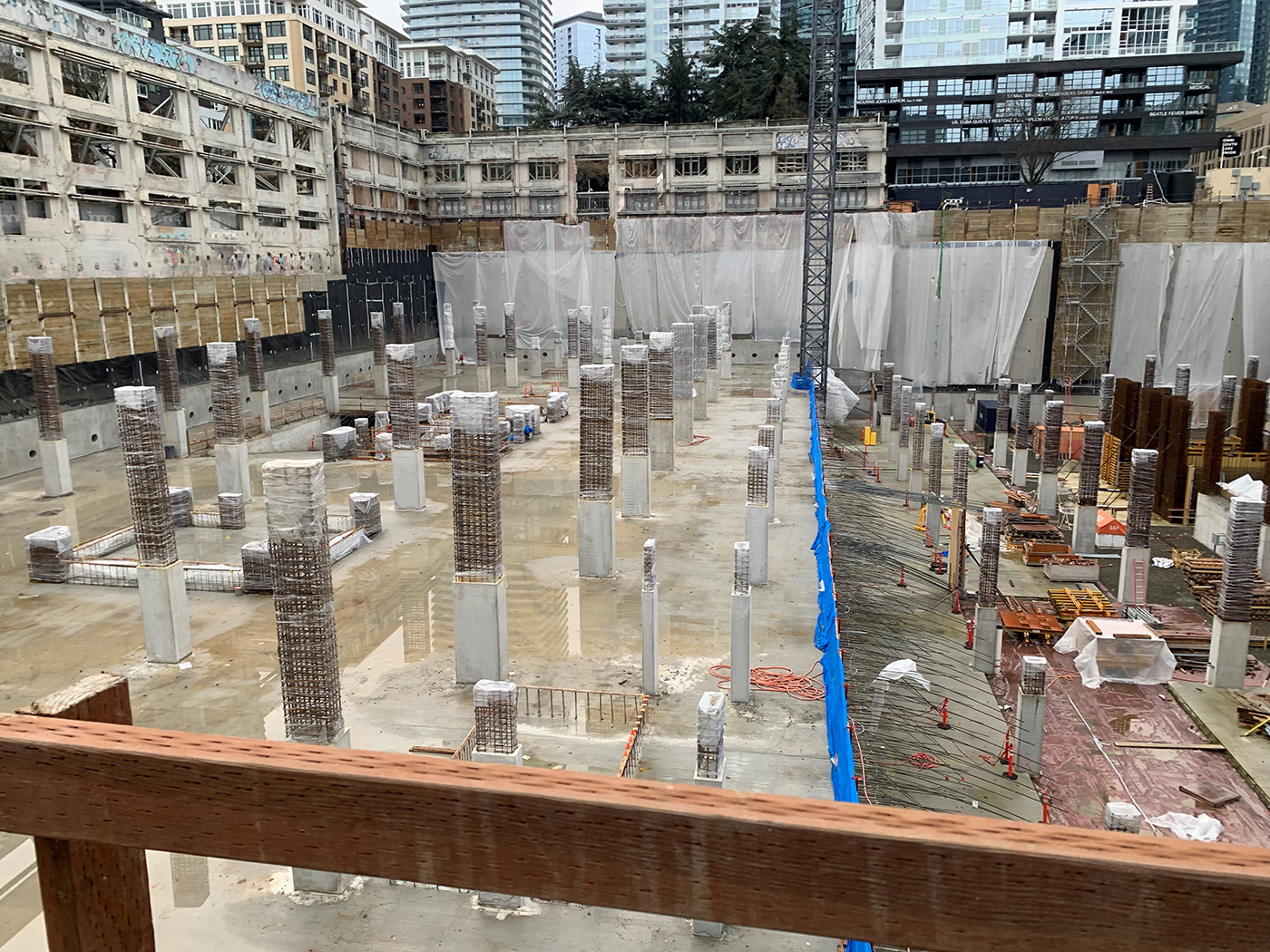
The pit: 701 S. Jackson St., from Housing Diversity Corporation.
What it has: Bracing and shoring for a future 202-unit building designed by Neiman Taber Architects. Workforce housing is the worthy goal. The present reality, in a pit stalled since last December, is standing water, random garbage, colorful graffiti and a few orange traffic cones lobbed over the fence.
What it lacks: More water, a diving board, waterfowl, a public lifeguard, landscaping with native plants, concession stand and fountain.
Rating: Three out of five stars.
Conclusion: Time to sell? Perhaps to Seattle Housing Authority?
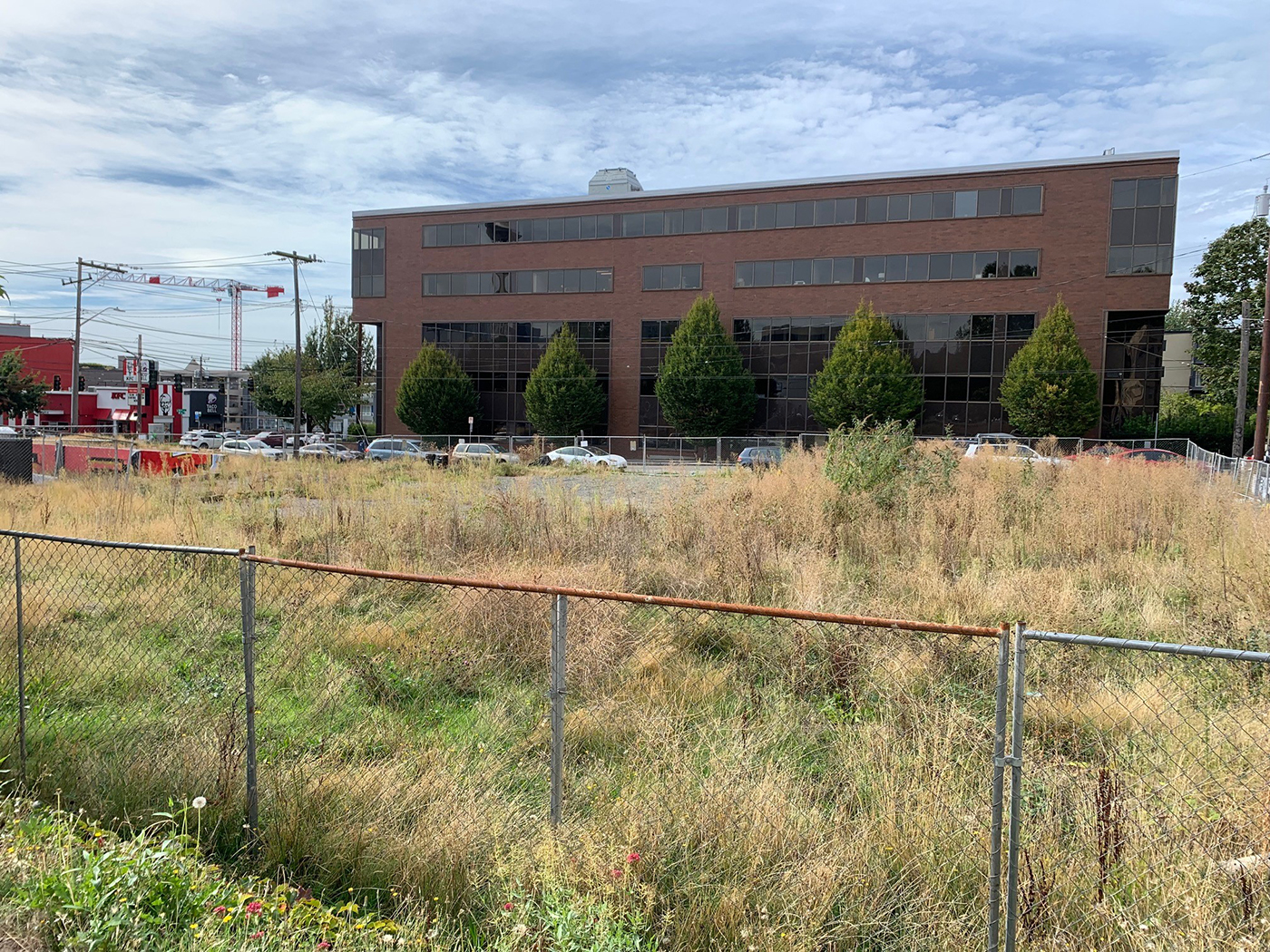
The pit: The former Tup Tim Thai site in Uptown.
What it has: Fulsome, resurgent greenery. Nature's natural infill resilience. A Thoreauvian idyll of bees and other pollinators, wildflowers, rabbits and mice, the sound of wind-kissed grass, birdsong and insect thrum. The concrete slab is broken by fresh roots, civilization gradually fades, the weeds may become a pocket forest, and the forest may one day demonstrate the absolute indifference of nature to man. It's both a celebration and a reproach.
What it lacks: Progress by SRM Development on a planned seven-story, 113-unit apartment building. Also, cheap convenient Thai food.
Rating: Three out of five stars.
Conclusion: In another year or two, the city might buy it as-is, for a new urban park.
The pit: The former Seattle Times north block in SLU
What it has: New potential for over 800 apartments, in two towers, after Onni Development abandoned its stalled office plan for 1120 John St., as the DJC first reported earlier this month.
What it lacks: Timing. First, back in 2014, it was going to be apartments. Then it was offices. And now back to apartments again. Make up your mind, Onni! Still, a very clean and well-tended pit. A professional and exemplary pit.
Rating: Three out of five stars.
Conclusion: Onni is making the right choice by shifting to multifamily.
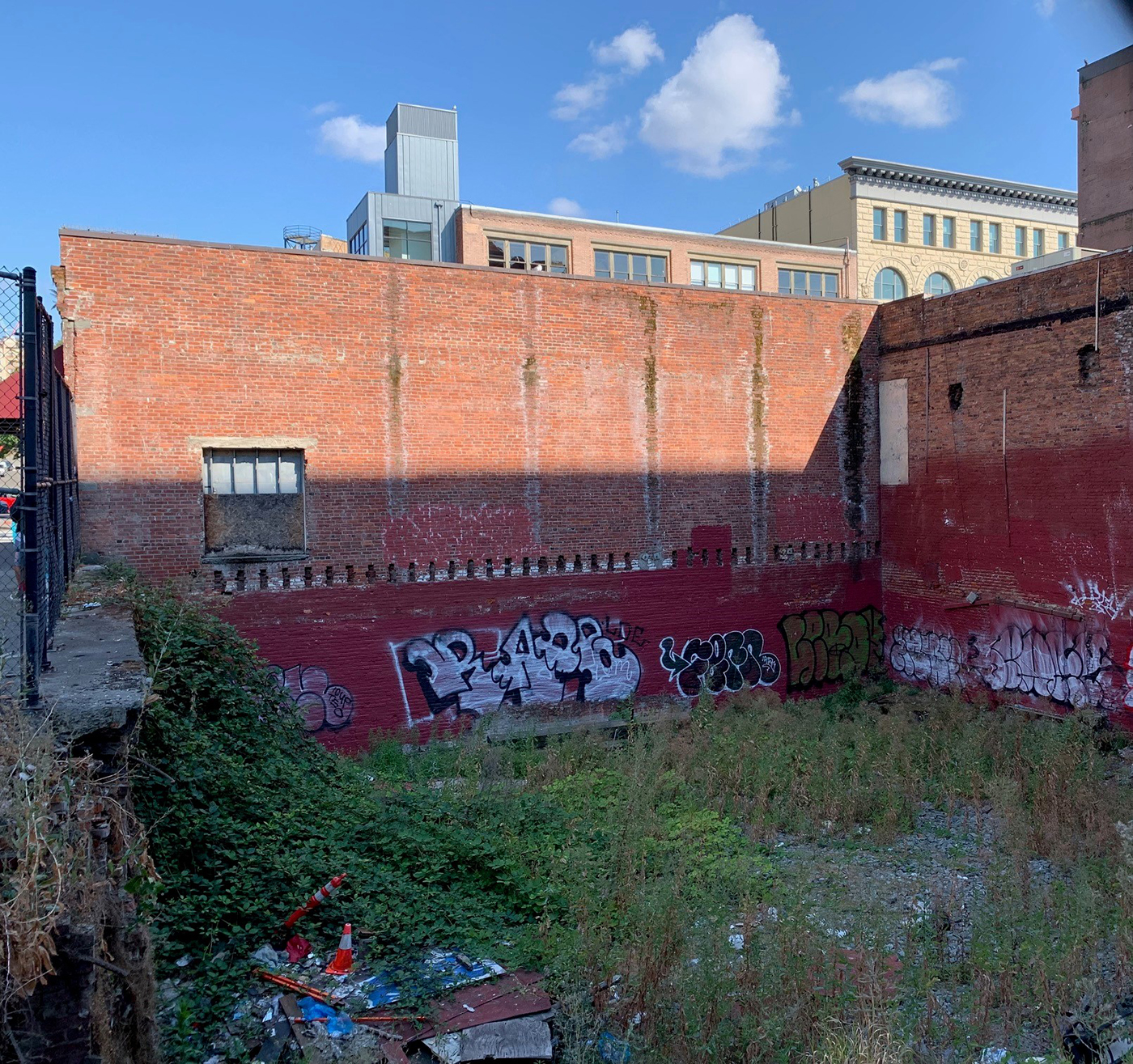
The pit: 165 S. Washington St. (next to McCoy's Firehouse Bar & Grill in Pioneer Square).
What it has: History! This has been a pit since 2003. Once home to the Area 51 punk rock venue, the quake-surviving remnants of two 1880s-era buildings were removed by owner Urban Visions. The latter, with fellow developer Johnson & Carr, has an eight-story, 77-unit apartment plan that's been quiet for years — and still awaits final permits.
What it lacks: More mature shrubbery, better graffiti, overturned shopping carts, additional orange traffic cones, raccoons, squatters, a firmer commitment to the mise-en-scène of malaise and urban decay.
Rating: Two out of five stars.
Conclusion: Pioneer Square already has an unfair concentration of shelters and soup kitchens compared to the rest of the city. But permanent supportive housing may be the best outcome here.
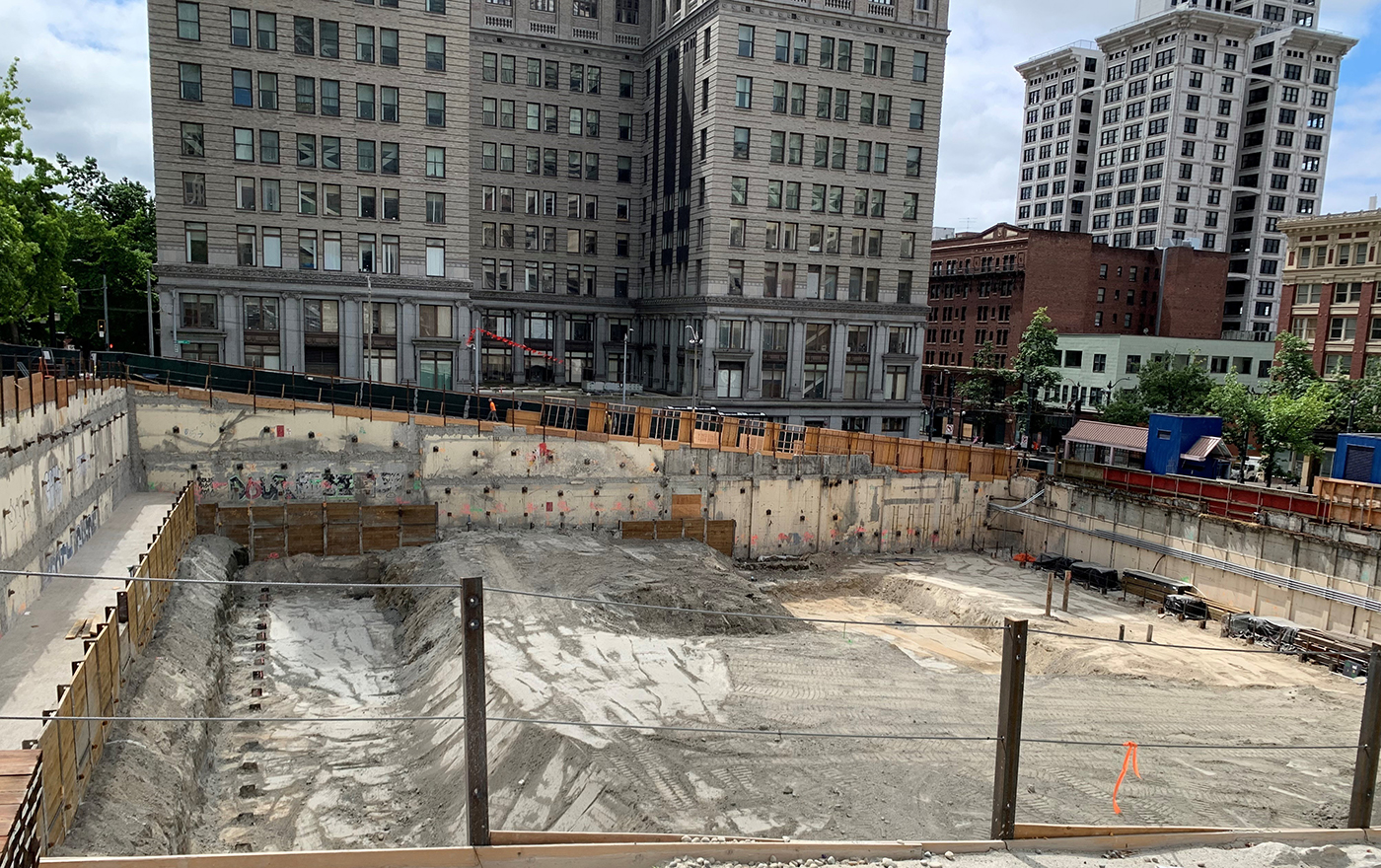
The pit: The former Public Safety Building block.
What it has: About 1.3 acres of downtown development potential, high-rise zoning, excellent access to transit and services, plus shoring, bracing and depth. It's been empty since the building was demolished in 2005, way back before the Great Recession.
What it lacks: Any discernible purpose. Long before the pandemic, Canadian developer Bosa Development bet big on a 57-story condo tower, paying the city about $22 million for the development rights in 2019. It halted work in 2022, after only a few months of pit grooming.
Rating: Five out of five stars.
Conclusion: The city needs to reacquire the pit by condemnation, pay Bosa a reasonable kill fee, and start fresh with a plan for midrise mixed-income housing.
Got a tip? Contact DJC real estate editor Brian Miller at brian.miller@djc.com or call him at (206) 219-6517.
Previous columns: